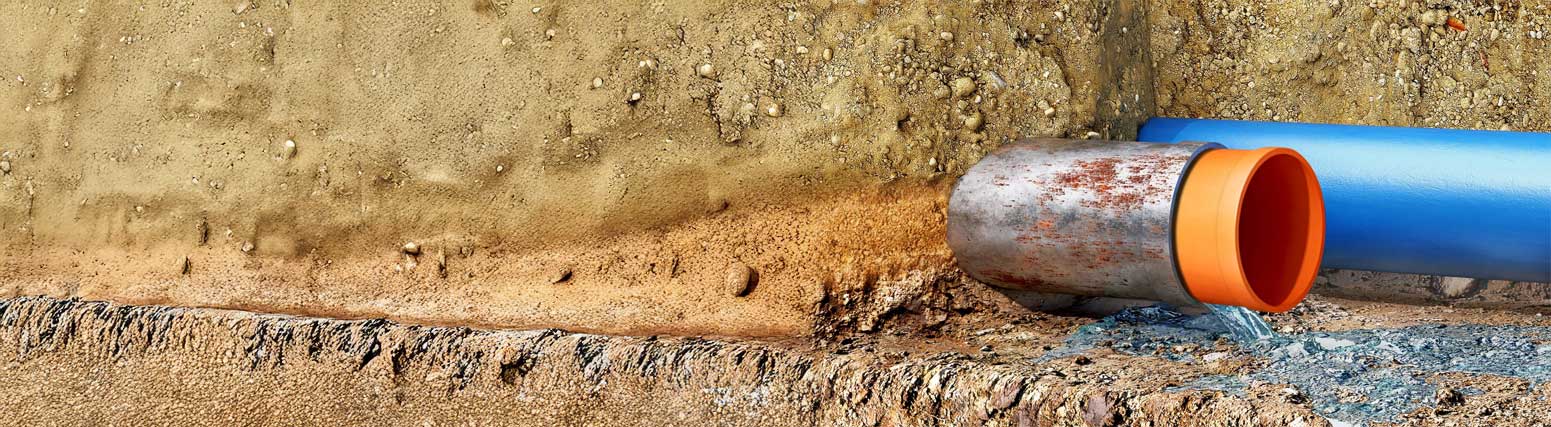
Short answer: Drain relining repairs a suitable damaged pipe from the inside by installing a new lining within the existing pipe. Drain replacement removes and installs pipework. Relining can reduce excavation where the pipe is suitable, but it is not appropriate for every defect. The condition and layout of the drain should be assessed before choosing either option.
What is drain relining?
Drain relining, sometimes called pipe lining, creates a new internal lining within an existing pipe. Before relining, the pipe generally needs to be inspected and cleaned so the condition and suitability can be assessed. The method and materials used depend on the pipe and repair required. Because the repair is made from inside the existing drain, relining may avoid extensive excavation in suitable cases.
Find out more about our drain relining service.
When might a drain need replacement?
Replacement may be considered where a pipe is severely collapsed, badly deformed, incorrectly laid, inaccessible for a lining method, or otherwise unsuitable for relining. The right repair cannot be decided from symptoms alone. A drainage professional should inspect the pipe and explain the options for that specific section.
Drain relining vs replacement: what is the difference?
- How it is repaired: Relining forms a new internal layer in the existing pipe; replacement installs new pipework.
- Disruption: Relining may require less excavation when the drain is suitable. Replacement can involve digging to reach the affected section.
- Suitability: Relining depends on the condition, shape, access and configuration of the existing pipe. Replacement may be needed when these prevent an effective lining repair.
- Decision process: Both options should be based on inspection findings and a clear explanation of the proposed work.
Does drain relining always avoid digging?
No. Relining is often described as trenchless, but access points may still be needed, and some situations are not suitable for lining. If a pipe has collapsed or its condition prevents the liner from being installed correctly, excavation and replacement may be the more appropriate option. Ask what access and reinstatement work is expected before agreeing to a repair.
How do I know which drain repair I need?
Start with a diagnosis rather than choosing a repair based on an online description. A CCTV drain survey can show visible defects in accessible pipework and help the drainage team explain whether relining, a local repair, replacement or further investigation should be considered. The survey is part of the assessment; the final recommendation depends on the actual condition of the drain.
Which option is cheaper: drain relining or replacement?
There is no reliable one-price answer. Cost depends on the location and length of the damaged section, access, pipe condition, the repair method and any reinstatement needed. Relining may reduce excavation in suitable cases, but it is not automatically the best-value option if the pipe is unsuitable. Request an itemised explanation of the recommended work and any alternatives before deciding.
What should I ask before approving drain repair work?
- What did the inspection find, and can you show me the relevant footage or images?
- Why is this repair suitable for the condition of my pipe?
- What access, excavation or reinstatement may be needed?
- Are there practical alternatives, and what are their limitations?
- What is included in the written price and any guarantee?
Clear answers help you compare proposals based on the diagnosis rather than the name of a repair method. Contact our drainage team if you would like to discuss a drain repair or survey.
Need a hand with your drainage?
Our team can help you find a practical solution and keep your property working as it should.